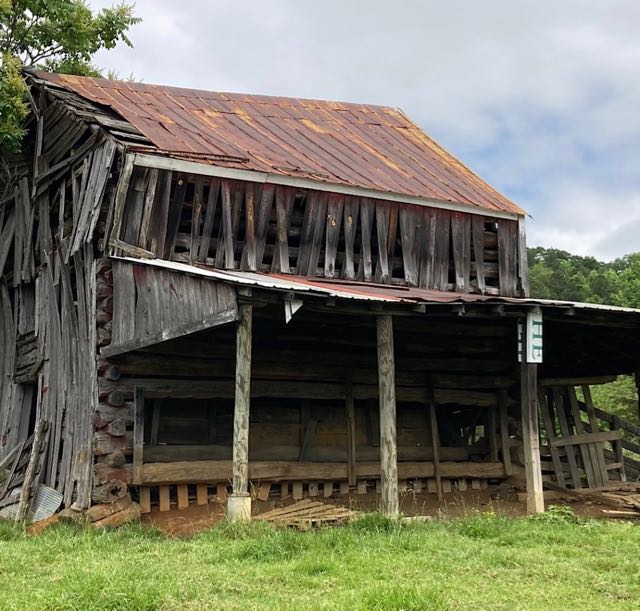
The easiest thing to do when faced with a difficult decision is to kick the can down the road. You know, put off that big decision until later. Postpone it. Avoid it, and hope it will somehow go away—until the day comes when the cans in the road are piled so high that you can’t get around them.
The large horse barn is in need of repairs “to make them safer for animals and people,” according to Farmcolony Vice President Becky Lorenzo. VP Lorenzo along with her husband, Gene, has built or remodeled three commercial equine facilities and is familiar with the needs of horses and the requirements for safe boarding. The Farmcolony Board of Directors kicked the can down the road when it chose to “potentially make changes to (the) large barn down the road.”
Let’s face it. Maintenance needs don’t just go away, and the cans are piling up.
What’s needed?
The barn is an original structure from earlier farm days and useful for housing horses. It provides stalls, tack rooms, and a common area large enough to accommodate vets and farriers.
Currently, the horse barn has no safe functional stalls, deteriorating Dutch doors, poorly placed electrical outlets, narrow doorways, an unsafe stall gate and ground hog holes and tunnels.
“The current horse barn needs two or three defined stalls with the aisle dedicated to grooming and tacking so that we can provide boarding for more than one horse,” advises VP Lorenzo in a proposal to the Board addressing minimal safety standards for our animal boarding facilities. “Some important aspects of the project would be creating two specific box stalls, rebuilding a Dutch door, moving two outlets to a safe area, boxing in and covering the fuse box and moving lights to insure they are in a safe spot.”
The horse pasture behind the current horse barn has two retaining walls with approximately 3’ drop offs that make them extremely unsafe. Fencing needs to be added or moved to the top of the dangerous drop offs to eliminate a narrow corridor leading to one of the entrances into the barn. “It is much too narrow for a horse and handler to pass safely. It also offers an opportunity for an aggressive horse to corner a pasture mate creating the potential for serious injury,” she added.
The cost for the barn repairs and improvements is estimated at approximately $1500. Adding fencing to the top of the retaining walls on either side of the barn would cost $235 in materials. Labor costs are not included since Farmcolony usually handles its own fencing.
The total estimated cost for barn repairs and improvements: $1735.
To put this cost into perspective, the Board recently purchased a third fireproof file cabinet for the farm for $1866. In other words, the farm could repair the
barn for less than the cost of one file cabinet.
Over the years the budget has not kept up with the maintenance needs of the horse barn and other farm structures. The can keeps getting kicked down the road. The chestnut barn in P12 is a stark reminder of what happens to a building when it falls beyond repair.
When maintenance is deferred, the burden to cover the costs for repair falls more heavily on current and future owners to make up the reserve deficit. That debt is now coming due, if we are to maintain the integrity of our buildings.
No decision is a decision.
Something for Everyone
At Farmcolony, we are a diverse group. We have each chosen to live in this farming community for a variety of reasons. Some people like to garden. Some do not. Some people like to raise goats. Some do not. Some like to ride horses. Some do not. Some people like beef. Some do not. Some like farm fresh eggs. Some do not.
Farmcolony exists for the enjoyment of all of its members. Our Deed of Dedication is clear:
Article VII. Section 2.
“…each and every owner of a lot in Farmcolony I shall have a non-exclusive perpetual right and easement of enjoyment in and to the farm…”
Common areas are community spaces available to all homeowners for use and enjoyment as part of their association membership. Since all lot owners have the right to use the general common elements, they all share the costs of maintaining them.
Article IV, Section 2.
Assessments shall be used to promote the recreation, enjoyment, health, safety and welfare of Farmcolony and the Owners by providing funds for the maintenance, operation and repair and improvement of the Farm.
Owners provide funds for the maintenance, operation and repair and improvement of the Farm through assessments. When an association fails to maintain or repair a common area, homeowners can sue the homeowners’ association (HOA). In fact, failure to maintain common areas is one of the most common HOA lawsuits.
Farmcolony exists for the enjoyment of its members.
Farmcolony exists for the enjoyment of its members, all of its members. Whether you are gardening, bottle feeding a calf, riding a horse, baking with farm fresh eggs, dining on farm-raised chicken or beef, enjoy!