IT’S BAT APPRECIATION MONTH!
Time to celebrate bats and their contributions to a healthy planet
It’s Bat Appreciation Month, a month dedicated to celebrating those eerie, creepy flying creatures and highlighting their vital role in our ecosystems.
Halloween, the spookiest of all holidays, is right around the corner and images of bats are going up everywhere — schools, homes, libraries, wherever Halloween revelers celebrate. Like skeletons, spiderwebs, ghosts and goblins, bats have become spooky representatives of this darkly festive day.
The connection between bats and Halloween is only natural. Bats are generally nocturnal and they drink blood, right? Well, not exactly.
Vampire bats do exist, but there are none in the United States. The closest vampire bats are found in Mexico. Vampire bats rely on the blood of other animals to survive and primarily feed on cattle or other large animals, which often don’t even notice the bat when it comes to dine.
Fun fact: Vampire bat saliva contains an anticoagulant — called “Draculin” — to keep the blood flowing, which scientists are studying as a potential treatment for blood clots.
Why we celebrate bats
Some people think of bats as blind, bloodthirsty, flying mice. Although bats are small like rodents, they are actually quite different.
Some bats can live up to 35 years, compared to rats that live 1-2 years. The oldest known bat was a male Brandt’s myotis who lived at least 41 years.
Bats can see just fine and actually have pretty good eyesight. In fact, some of the larger, fruit-eating bats can see three times better than humans.
A 2011 University of Calgary study found that less than one percent of bats carry rabies, and they rarely infect people. In fact, dogs are the main source of human rabies deaths around the world.
And, no, bats do not commonly get tangled in people’s hair. Bats don’t build nests.
When simply left alone, bats are harmless and highly beneficial.
Fun fact: Bats are classified in order Chiroptera and mice in Rodentia. Bats are actually more closely related to humans than to mice and rats.
Bats are among the most important animals on Earth
Despite their spooky image, bats are among the most important animals on Earth for their vital ecological role in the balance of nature around the world. These fascinating flying mammals act as natural pest controllers, pollinators, and seed dispersers, vital to healthy forests and biodiverse environments.
Bats provide an important ecological service by eating tons of insects. On average, most bats can eat up to half their body weight in insects. A single little brown bat can devour from 300 to 3,000 insects a night. Scientists estimate that insect-eating bats may save U.S. farmers roughly $23 billion each year by reducing crop damage and limiting the need for pesticides.
Bats pollinate more than 300 plant species around the world, including some of our major food crops.
Night-foraging fruit bats cover vast distances each night and scatter far more seeds than other animals, including birds. Seeds dropped by bats can account for up to 95 percent of the first new growth across cleared areas.
Even bat guano is an important resource and fertilizer.
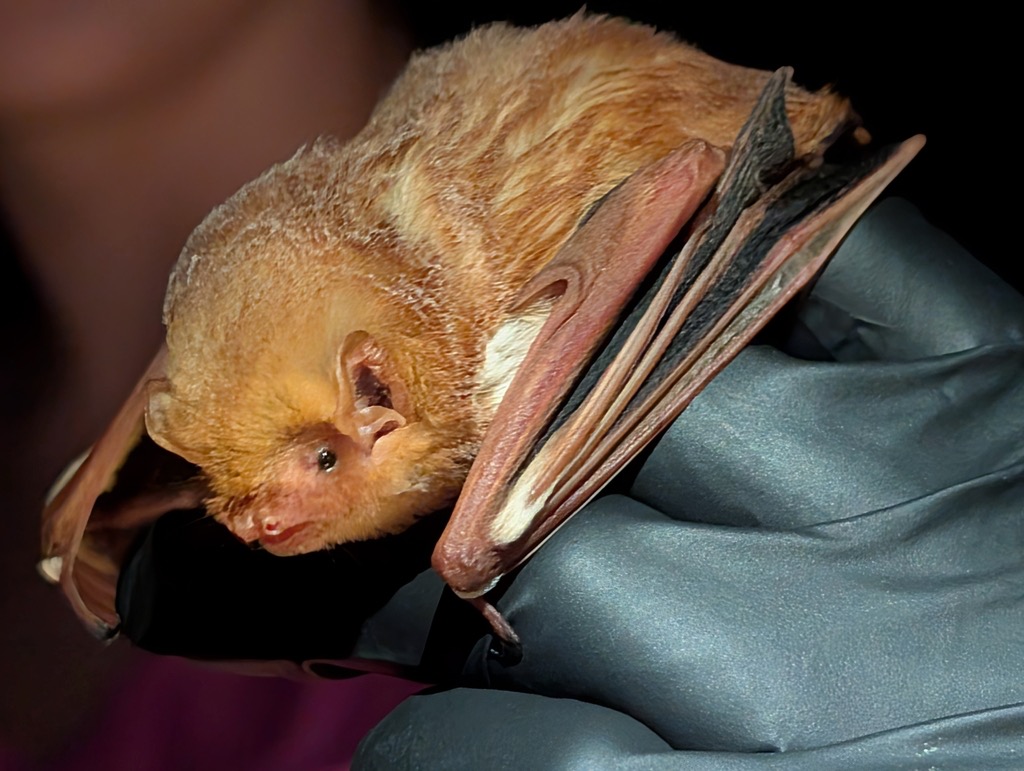
Fun fact: Bats have fur on their bodies, sometimes including their head. Their wings, however, do not have fur. Bats can be a range of colors, including red, tan, brown, and gray.
Have you ever witnessed a bat darting across the dusky sky?
If so, you’ve witnessed one of nature’s most remarkable and efficient nighttime mechanisms at work.
Insect-eating bats use a biological sonar system where they emit sound waves (undetectable to people) and listen to the returning echoes. When a sound hits an object, it bounces back to the bat’s ears and gives the bat an audible map for the shape, distance, and location of nearby objects, hopefully an insect.
A bat can make almost instant turns to catch a flying insect. A bat’s echolocation system is so advanced and precise that scientists study bats to make sonar equipment for ships.
Scientists study bats to further expand our understanding of flight, sound, sonar, and evolutionary biology.
Fun fact: Bats are the only mammal capable of true flight. Instead of arms or hands, they have wings. The wings have a bone structure similar to the human hand.
A DANGEROUS TIME FOR BATS
Today, bats are under unprecedented threat. The 2023 published report “State of the Bats” shows “52 percent of bat species in North America are at risk of populations declining severely in the next fifteen years.” Without concerted international action, bat populations will continue to fall, driving many species to extinction.
CONSERVATION STATUS
- 23 Bat species are critically endangered (face imminent risk of extinction)
- 85 Bat species are endangered
- 113 Bat species are considered vulnerable
- 236 Bat species are considered “Data Deficient,” an indicator that more conservation attention is necessary for these species
In Virginia, we have three species of bats (Indiana bat, gray bat, and Virginia big-eared bat) that are listed as Federally Endangered and one species (Rafinesque’s big-eared bat) listed as State Endangered.
Why are bats at risk?
Bat populations are rapidly declining due to habitat destruction, accelerated climate change, and disease. In many parts of the world, bats are victims of casual killing, the result of harmful myths and misplaced fears.
As bat populations continue to decline worldwide, their potential for extinction grows.
Fun fact: Bats have been on Earth for more than 50 million years. With more than 1,500 species, they are the second largest order of mammals, and are widely dispersed across six continents. Despite the large diversity of bats around the world, only 17 species of bats have been documented in Virginia.
How to help beleaguered bats
Tips from the National Wildlife Federation (NWF):
- More than half of our native bats roost in tree cavities and the narrow, rough spaces between bark and wood. If a dead tree doesn’t pose a safety concern, leave it in your yard.
- Keep it organic. A garden that is good for insects is good for bats, so avoid the use of pesticides in your garden as well as the use of remedial timber treatment agents in structures. Both can lead to the poisoning of bats.
Fun fact: Homeowners use up to 10 times more chemical treatment per acre than farmers.
- Support local wildlife by planting native species of plants and trees to create habitat. Check out this list from the NWF of bat-friendly plants for regions around the United States.
- Cat attacks are one of the most common causes of bat (and bird) casualties, so keep your cat indoors at night, from at least a half hour before sunset to a half hour after sunset when bats are most active, especially during summer months when bat mothers are feeding their young.
Fun fact: Bats are mammals—they bear their young live, feed their young milk, and grow hair. They are the only mammal that can sustain flight.
- Leave the leaves. Allow fallen leaves in your yard to provide winter shelter for bats and the insects they often depend upon.
- Turn off unnecessary lights. Keep your yard darker to support bats, using red or down-cast lights for illumination or a motion light to illuminate a space as needed.
- Build a bat box for roosting and rearing baby bats, called pups. Consult the National Wildlife Federation website for bat house designs and other tips.
Fun fact: Bats are quiet, fast, and often misunderstood. They are also among the most important animals on Earth. Their story is deeply connected to the health of the planet.
Happy Bat Appreciation Month!
Now is the time to celebrate bats and their contributions to a healthy planet. The celebration culminates annually during Bat Week held from October 24–31, an international, annual celebration designed to raise awareness about the need for bat conservation. You can find educational events and activities online at https://batweek.org/activities/. And don’t forget to hang your bat decorations.
Have fun observing bats!
Watching Tips from NWF:
- All bats eat at night and sleep during the day. Look for bats just before the sun goes down.
- You can often see bats circling around street lights gobbling up insects attracted to the lights.
- If you live near water, you can see bats swooping low over ponds, lakes, or streams.