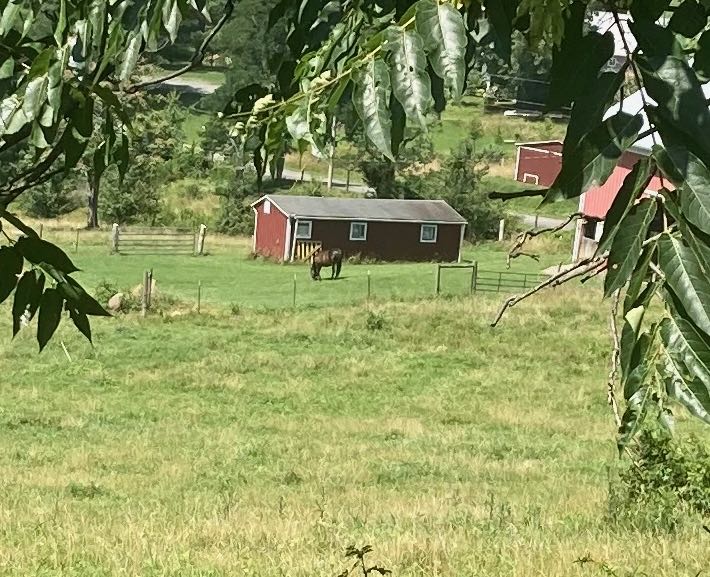
The horse boarding facilities at Farmcolony “are not safe for horses or humans,” according to Farmcolony Vice President Becky Lorenzo who raised her concerns over the safety of our horse boarding facilities in a January Board meeting. She is speaking from experience with 30+ years owning and managing boarding facilities. In response, the Board of Directors formed an ad hoc committee to review current conditions in our animal boarding facilities and to make recommendations to the Board on any necessary improvements. Will Farmcolony continue to offer a horse boarding amenity or will that long-held amenity be removed? If the horse boarding amenity is to remain, how do we ensure minimum safety standards in the horse boarding facilities? These are the questions before the board.
Question: Do our horse boarding facilities meet basic safety standards?
Answer: The ad hoc committee is reviewing current conditions of our animal boarding facilities to make recommendations to the Board on improvements that might be needed to meet minimum safety standards. The committee is also reviewing current Farmcolony operating procedures on animal boarding.
Question: How did the horse facilities fall into disrepair?
Answer: Conditions in the horse boarding facilities have deteriorated over time as routine maintenance on the stables and grounds has been inadequately funded over the years. The cost of repairing the facility has increased over time as facilities have fallen into further disrepair.
Question: Should the Farmcolony Board of Directors repair the horse boarding facilities as needed or remove this long-held amenity from the membership?
Answer: That is the question.
To continue to provide the horse boarding amenity, the horse boarding facilities need to meet basic safety standards to avoid any possible liability that could result from unsafe boarding conditions. History shows that animal boarding is an appealing amenity that has attracted home buyers to the community and otherwise been a financial gain to the farm. While the farm is responsible for the maintenance and upkeep of the boarding facilities, the income from animal boarding has generally exceeded maintenance costs, especially in those years when no funds were allocated for general maintenance and upkeep, and since animal boarders are responsible for the care of their own animals, no additional labor is required from the farm. However, it is the responsibility of the association to maintain the facilities.
Question: How much will it cost to repair the facilities and how will we pay for it?
Answer: The Board has voted to continue to allow horse boarding at Farmcolony in its current state for the time being as it reviews the need for repairs. Any repairs made to the facility must be funded and carried out by the Board of Directors. Our governing documents provide three possible funding sources to cover the cost of repairs: The reserve, a special assessment, membership fees, or a little bit of all three.
The Reserve. The reserve is money set aside to meet future costs or obligations of the association. It is a report which outlines the common areas of the farm that are the Association’s responsibility with the expected replacement costs associated with them over time. It provides a replacement schedule for common areas and indicates how much the Association will need to set aside now and annually to have enough to meet these future obligations. Is there money currently set aside in the reserves to pay for any needed repairs to the horse boarding facilities? If not, a special assessment may be needed to cover the cost of repairs.
Special Assessment. If there isn’t enough money in the reserve to cover a repair, you as a member could be charged a special assessment. Separate from typical HOA costs such as regular dues, a special assessment is extra fees levied by the Board of Directors that are usually charged in the case of unforeseen major repairs. Members of an HOA community are required to pay for special assessments if they arise.
Membership Dues. When you purchase a home in a community governed by a homeowners’ association, you automatically become a member and are required to pay ongoing quarterly or monthly HOA fees as long as you own the home. Generally, HOA fees cover the routine maintenance and repair of common areas. Board members determine the level of HOA fees needed to prudently operate the Association and collect them.
Question: Should the horse boarding amenity go or remain?
Answer: Currently, Farmcolony governing documents provide for the private boarding of horses — and donkeys and alpacas and goats — and they have been a key part of the farm since its inception. To some, losing the horse boarding amenity would be losing the atmosphere of a rural, family-friendly farm, a loss not only counted in monetary terms, but also in terms of enjoyment.
This goes to the heart of who we are as a community.